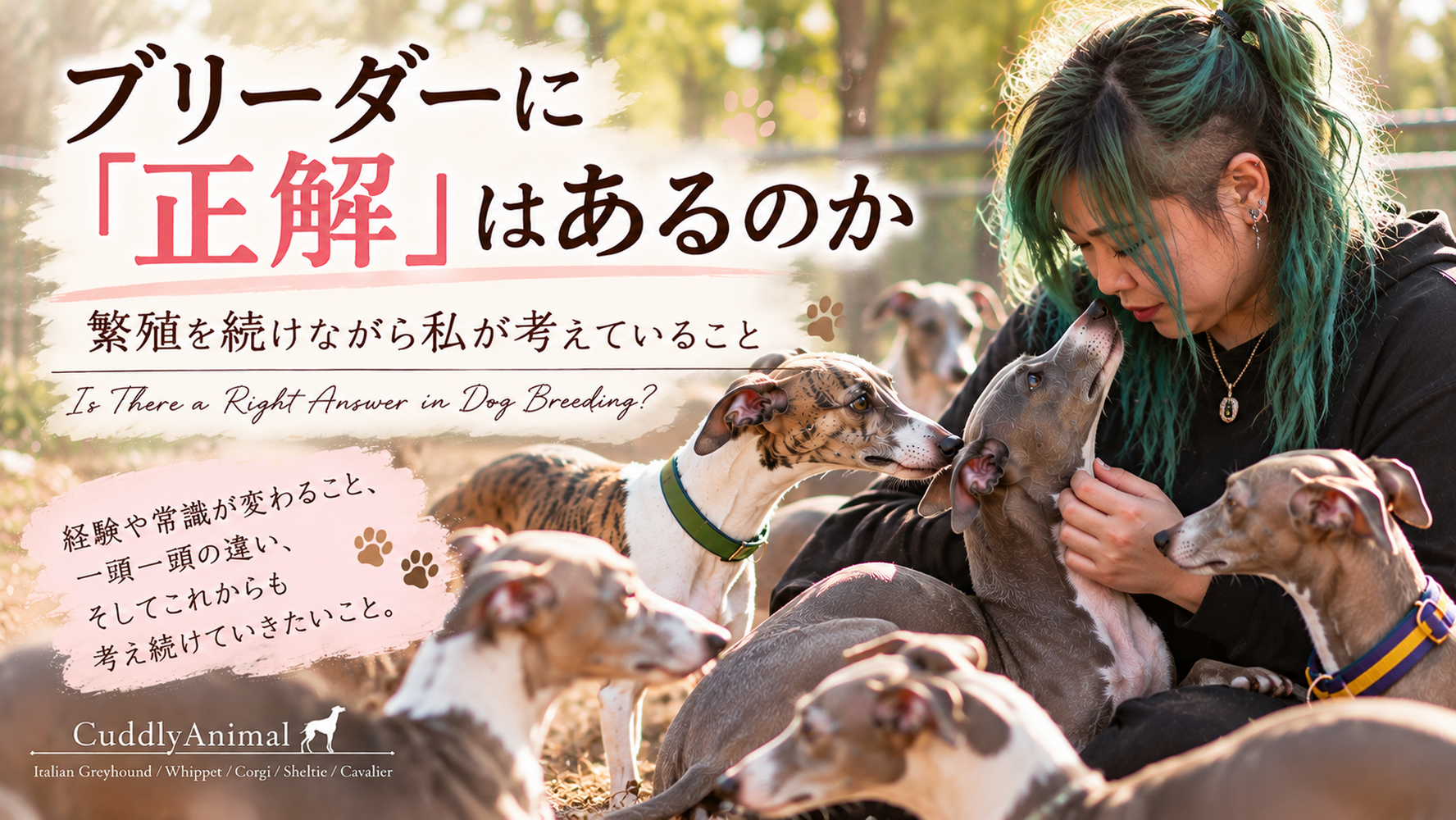
ブリーダーに「正解」...
繁殖を続けていると、「これが正解です」と言い切ることが、...
31.Oct.2026

繁殖を続けていると、「これが正解です」と言い切ることが、だんだん難しくなってきます。 もちろん、繁殖者として自分なりの考えや方針は必要です。 健康をどう考えるのか。 考えなければならないことはたくさんあります。 私自身にも、繁殖を始めた頃より今の方が明確になった考えがあります。 それでも私は、 「自分の考えが正解だ」 とは思わないようにしています。 経験年数だけでは分からないこと ブリーダーの世界では、時々「何年やっているか」が経験の大きさとして語られます。 もちろん、長く続けてきた経験には大きな価値があります。 実際に犬を育て、繁殖し、子犬を見送り、その後の成長まで見てきたからこそ分かることはたくさんあります。 私も経験から学んだことは数え切れません。 でも、私は「20年続けている人なら、5年続けている人より必ず多くのことを知っている」と単純には考えていません。 大切なのは、その年月の中で何を見てきたのか。 何に疑問を持ったのか。 うまくいかなかった時に、なぜそうなったのかを考えたのか。 新しい知識に触れた時、それまでの自分の考えを見直すことができたのか。 同じ5年でも、同じ20年でも、その中身は一人ひとり違うと思うからです。 昔の「常識」が変わることもある 犬に関する知識も、ずっと同じではありません。 獣医学も遺伝学も、研究が進めば新しいことが分かります。 私自身、「昔からそう言われているから」という理由だけで、そのまま信じないようにしています。 たとえば以前、シェルティと薬剤について気になることがありました。 昔から聞いていた知識があったからこそ不安になり、私は獣医師に確認しました。 一人だけではなく、別の獣医師にも聞きました。 そこで説明を受けて、 「自分が覚えていた知識を、そのまま現在の常識として扱ってはいけないんだな」 と改めて感じたことがあります。 これは、昔の知識が無意味だったという話ではありません。 その時代には、その時代の知見があります。 でも知識は更新されていくものです。 だからこそ、昔覚えたことをずっと「絶対」として持ち続けるのではなく、必要な時にはもう一度調べ、専門家に確認し、自分の知識も更新していく必要があると思っています。 経験が増えるほど、正解が分からなくなる 少し不思議ですが、犬を見れば見るほど、私は「こうすれば絶対」というものが少なくなってきたように感じます。 なぜなら、犬は一頭一頭違うからです。 同じ犬種でも違う。 同じ親から生まれた兄弟でも違う。 同じ環境で育てても違う。 「普通はこうなる」と思っていたところに、そうならない一頭が現れることもあります。 経験が増えれば、答えがどんどん単純になると思っていました。 でも実際には逆でした。 知れば知るほど例外が見えてくる。 考えなければならないことが増えてくる。 だから私は、 経験が増えるほど、正解が分からなくなる。 それは悪いことではないと思っています。 むしろ「分かったつもりにならない」ために必要なことなのかもしれません。 知識は、犬に返すために持つもの 犬について勉強していると、たくさんの知識が増えていきます。 でも私は、知識は誰かより自分が上だと示すためのものではないと思っています。 目の前にいる犬のために使う。 これから生まれてくる犬たちのために使う。 より健康に、より良い状態で次の世代へつなげるために使う。 知識は、自分がどれだけ知っているかを見せるためではなく、犬に返すために持つもの。 私はそう考えています。 だから、誰かと違う考えを持っていたとしても、「自分が正しくて相手が間違っている」とすぐに決めるのではなく、 「なぜその人はそう考えるんだろう」 と一度考えられる繁殖者でいたいと思っています。 繁殖の考え方や目指す犬も、ブリーダーによって違います。 もちろん、犬の健康や福祉を守るために譲ってはいけない部分はあります。 でも、その中でどんな犬を目指し、どんな考えで次の世代を作っていくのかには、それぞれの繁殖者の考えがあります。 繁殖して子犬を送り出すだけではない 繁殖して、子犬が生まれて、新しい家族のもとへ送り出す。 それはブリーダーの大切な仕事です。 でも私は、それだけがブリーダーの仕事ではないと思っています。 親犬を見て、子犬を見て、その子たちが成長した姿を見る。 思った通りだったところも、そうではなかったところも覚えておく。 次の組み合わせを考える。 新しい研究や知識に触れる。 自分の考えを見直す。 その繰り返しです。 繁殖を続けるということは、犬を産ませ続けることではなく、 考え続けることでもある。 私はそう思っています。 20年後も「本当にそうなのかな」と言えるように 今、私が正しいと思っていることも、10年後、20年後には違っているかもしれません。 新しい研究によって変わることもあるでしょう。 もっと多くの犬を見ることで、自分自身の考えが変わることもあると思います。 それでいいと思っています。 考えが変わることは、今までの自分を否定することではありません。 新しく知ったことを犬たちに返していくために、自分自身も変わっていく。 それも繁殖者として必要なことだと思うからです。 もし20年後もブリーダーを続けていたとしても、 「私はこの犬種を全部分かっている」 ではなく、 「これは本当にそうなのかな?」 と考えられる繁殖者でいたい。 正解なんてない。 だからこそ、考え続ける。 それが、今の私が繁殖に向き合う上で大切にしていることです。
どんな体を目指すのか。
どんな組み合わせを選ぶのか。
何を次の世代に残し、何を残さないのか。
The longer I breed dogs, the harder it becomes to say, “This is the correct answer.”
Of course, every breeder needs their own principles.
We have to think about health, structure, temperament, genetics, breeding combinations, and what we want — or do not want — to carry into future generations.
My own ideas about breeding have become clearer through experience.
Even so, I try not to believe that my way is automatically the “right” way.
Years of experience do not tell the whole story
Experience matters enormously in breeding.
There are things we can only learn by raising dogs, planning litters, watching puppies grow, and seeing what those puppies become as adults.
But I don’t believe that the number of years alone tells us how much someone has learned.
What did they observe during those years?
What made them question their assumptions?
When something didn’t go as expected, did they ask why?
When new information became available, were they willing to reconsider what they previously believed?
Five years of experience can look very different from one breeder to another — and so can twenty years.
What we once considered “common knowledge” can change
Our knowledge about dogs does not remain unchanged.
Veterinary medicine and genetics continue to develop as new research becomes available.
For that reason, I try not to accept something simply because “that’s what people have always said.”
There have been times when something I had learned in the past made me concerned about a medication and a particular breed.
Instead of assuming my old knowledge was still the complete answer, I asked a veterinarian. I then asked another veterinarian as well.
That experience reminded me that information needs to be revisited and updated.
This doesn’t mean that older knowledge was worthless.
It means knowledge develops.
As breeders, I believe we need to continue researching, asking professionals when necessary, and updating our understanding.
The more experience I gain, the less simple the answers become
Interestingly, the more dogs I observe, the fewer things I feel comfortable describing as absolute.
Every dog is different.
Dogs of the same breed are different.
Even littermates can be different.
Dogs raised in similar environments can develop differently.
Just when we think, “Dogs usually respond this way,” one dog may show us otherwise.
I once imagined that more experience would make the answers simpler.
Instead, I have found the opposite.
The more I learn, the more exceptions I see.
And the more questions I have.
The more experience I gain, the less certain the “right answer” sometimes becomes.
I don’t think that is a weakness.
Perhaps it is part of avoiding the belief that we already know everything.
Knowledge should be given back to the dogs
When we study dogs, we naturally accumulate knowledge.
But I don’t believe knowledge exists to prove that we know more than someone else.
It should help the dog standing in front of us.
It should help the dogs who will be born in the future.
It should help us make better decisions about health, temperament, structure and breeding.
Knowledge is not something we collect to show how much we know. It is something we should give back to the dogs.
That is how I try to approach it.
Breeding is more than producing and placing puppies
Breeding a litter, raising puppies and sending them to their new families are important parts of a breeder’s work.
But I don’t believe that is where the job ends.
We observe the parents.
We watch the puppies grow.
We learn what developed as expected — and what didn’t.
We reconsider future combinations.
We read new information.
We sometimes change our minds.
Then we begin thinking again.
To me, continuing to breed does not simply mean continuing to produce puppies.
It also means continuing to think.
I hope I am still asking questions twenty years from now
Some things I believe today may turn out to be incomplete ten or twenty years from now.
New research may change our understanding.
More experience may change my own perspective.
And I think that is okay.
Changing my mind after learning something new does not mean rejecting everything I believed before.
It means allowing what I learn today to improve what I do tomorrow.
If I am still breeding dogs twenty years from now, I hope I will not be saying:
“I know everything there is to know about this breed.”
I hope I will still be asking:
“Is this really true?”
There may never be one final answer in breeding.
That is exactly why I believe we must keep thinking, questioning and learning.
Cuddly Animal
住所:茨城県石岡市山崎3745-6