このジョイを見た瞬間...
このジョイを見た瞬間「……なんか、どこかで見たことある🤣」っ...
03.Oct.2026

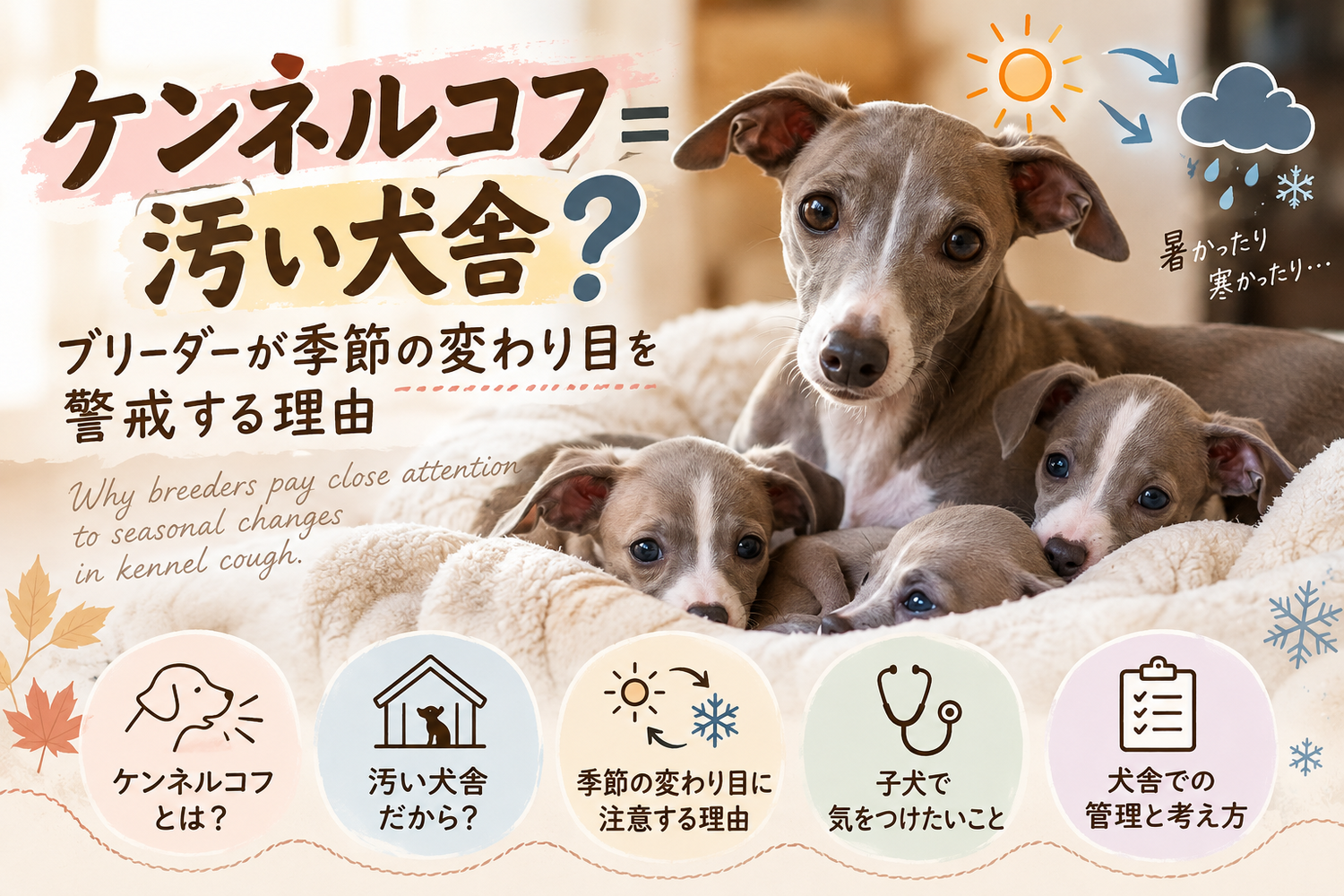
私が「季節の変わり目」を嫌う理由
ブリーダーをしていて、毎年ちょっと嫌だなと思う時期があります。
それが、季節の変わり目。
特に、暖かい季節から寒い季節へ変わっていく時期です。
昼間は暑いくらいなのに、夜になると急に冷える。
寒くなったと思ったら、翌日はまた暑い。
人間でも体調を崩しやすいような、気温が安定しない時期。
成犬たちは比較的元気に過ごしてくれることが多いのですが、私が特に気をつけて見ているのが子犬たちです。
その理由のひとつが、ケンネルコフなどの呼吸器症状です。
ケンネルコフとは?
ケンネルコフは、ひとつの病原体だけで起こる病気ではありません。
現在は「犬伝染性呼吸器疾患(CIRDC)」という考え方で捉えられることが多く、ボルデテラ菌、犬パラインフルエンザウイルス、犬アデノウイルス2型など、複数のウイルスや細菌が関係します。
代表的な症状は咳ですが、鼻水やくしゃみなどが見られることもあります。
多くは比較的軽い症状で経過しますが、子犬では肺炎などに進行する可能性もあるため、「犬の風邪みたいなものだから大丈夫」と軽く考えてよいものでもありません。
咳や元気・食欲の低下など気になる症状がある場合には、獣医師による診察が必要です。
ケンネルコフが出た=外から病気の犬を入れた?
これは、私自身ブリーダーをしていて感じることなのですが、
「最近、新しい犬を犬舎へ迎えたわけでもない」
「明らかに体調の悪い犬と接触したわけでもない」
それでも、季節の変わり目になると子犬に咳などの呼吸器症状が出ることがあります。
ここは少し誤解されやすいところかもしれません。
ケンネルコフは感染性の呼吸器疾患なので、もちろん病原体が関係しています。
ただし、
「ケンネルコフが出た=直前に誰かが外から病気の犬を持ち込んだ」
と単純に結びつけられるものでもありません。
犬の呼吸器には、症状を出さずに存在する微生物もあります。また、感染していても症状が分かりにくい場合や、回復後もしばらく病原体が残る場合もあります。
そのため、実際の現場では「この犬が、この日に、この病原体を持ち込んだ」と原因をひとつに特定できないこともあります。
なぜ季節の変わり目に注意するの?
私が特に嫌なのが、
「昨日は暑かったのに今日は寒い」
「昼と夜で気温が大きく違う」
という時期です。
獣医学的にも、急激な温度変化だけでなく、湿度、換気、ストレスなどの環境要因は、呼吸器感染症へのかかりやすさや症状の程度に影響することが知られています。
だから私は、この時期になると特に子犬たちの様子をよく見るようにしています。
咳をしていないか。
鼻水は出ていないか。
食欲はいつも通りか。
元気はあるか。
「なんとなくいつもと違う」という小さな変化も見逃さないようにしています。
ケンネルコフ=汚い犬舎なのでしょうか?
「ケンネルコフが出る犬舎は不衛生なのでは?」
そう思われる方もいるかもしれません。
もちろん、犬が集団で生活する環境では、清掃や消毒、換気、体調不良の犬への対応など、日々の衛生管理はとても重要です。
不衛生な環境や過密な飼育、換気不足などは、感染症が広がるリスクを高める要因になります。
だからといって、
ケンネルコフが発生したという事実だけで、その犬舎が不衛生だったと判断することもできません。
生き物を扱っている以上、感染症のリスクを完全にゼロにすることはできないからです。
大切なのは、「絶対に病気を出さない」と言い切ることではなく、変化をできるだけ早く見つけ、必要に応じて獣医師へ相談し、ほかの犬への感染拡大や重症化を防ぐための対応をすることだと私は考えています。
子犬を育てているからこそ、季節の変化には敏感になります
何度経験しても、季節の変わり目はやっぱり好きになれません。
特にまだ身体が成長途中の子犬がいる時期は、
「今日は冷えるな」
「昼夜の温度差が大きいな」
そんなことまで気になるようになります。
犬舎では、元気に走っている姿だけではなく、食欲、便、呼吸、咳、鼻水、いつもの動き方など、毎日の小さな変化を見ています。
病気を100%防ぐことはできません。
だからこそ、何も起こらないことだけを目標にするのではなく、
起きた変化にどれだけ早く気づき、その子に必要な対応ができるか。
それも、たくさんの犬や子犬を預かるブリーダーの大切な仕事のひとつだと思っています。
CuddlyAnimalでは、イタリアングレーハウンドを中心に、子犬たちの成長だけでなく、繁殖や健康管理について実際の犬舎で感じたことも発信しています。
これから犬を迎える方にとって、少しでも犬の健康やブリーダーの仕事を知るきっかけになれば嬉しいです。
Why I Don’t Like Seasonal Changes There is one time of year that always makes me a little nervous as a breeder: the changing of the seasons, especially when warm weather begins turning cold. It may be warm during the day and suddenly cold at night. Then, just when you think the colder weather has arrived, the temperature rises again. Adult dogs often handle these changes relatively well, but I pay particularly close attention to puppies. One reason is the risk of respiratory illness, including kennel cough. What Is Kennel Cough? Kennel cough is not caused by one single pathogen. It is commonly discussed as part of Canine Infectious Respiratory Disease Complex (CIRDC), which can involve several viruses and bacteria, including Bordetella bronchiseptica, canine parainfluenza virus, and canine adenovirus type 2. Coughing is the most recognizable sign, although sneezing and nasal discharge may also occur. Many cases are relatively mild, but puppies can sometimes develop more serious complications such as pneumonia. For this reason, coughing or other respiratory symptoms should not simply be dismissed as “just a cold.” When concerning symptoms appear, veterinary evaluation is important. Does Kennel Cough Mean a Sick Dog Was Recently Brought Into the Kennel? As a breeder, I have experienced situations where no new dog had recently entered the kennel and there had been no obvious contact with a sick dog, yet puppies developed coughing or other respiratory symptoms during a seasonal transition. This can easily be misunderstood. Kennel cough is infectious, so pathogens are involved. However, the appearance of kennel cough does not necessarily mean that someone recently brought an obviously sick dog into the kennel. Some microorganisms can be present in the respiratory tract without causing obvious illness. Dogs may also carry infectious agents without showing clear symptoms, and some pathogens may remain in the respiratory tract during recovery. In real-life situations, it is therefore not always possible to identify one particular dog, one particular day, or one single source as the cause. Why Do I Pay Extra Attention During Seasonal Changes? The periods I dislike most are those when one day is warm and the next is cold, or when daytime and nighttime temperatures differ greatly. Veterinary references recognize that environmental conditions—including temperature, humidity, ventilation, and stress—can influence susceptibility to respiratory disease and its severity. That is why I watch puppies particularly carefully during these periods. Are they coughing? Do they have nasal discharge? Are they eating normally? Are they as active as usual? Even a small change from their normal behavior can be important. Does Kennel Cough Mean a Kennel Is Unclean? Some people may wonder whether kennel cough is evidence of poor hygiene. Cleanliness, disinfection, appropriate ventilation, avoiding overcrowding, and responding appropriately to sick dogs are all extremely important when multiple dogs live together. Poor hygiene and unsuitable environmental conditions can increase the risk of infectious disease spreading. However, the occurrence of kennel cough alone does not prove that a kennel is dirty or poorly managed. When caring for living animals, it is impossible to reduce the risk of every infectious disease to absolute zero. For me, responsible management is not about claiming that illness can never occur. It is about noticing changes as early as possible, consulting a veterinarian when necessary, and taking appropriate measures to reduce the risk of transmission and serious illness. Raising Puppies Makes You Sensitive to Small Changes No matter how many times I experience it, I still do not like seasonal transitions—especially when young puppies are growing in the kennel. I find myself noticing things such as how cold the night will be or how different the daytime and nighttime temperatures are. At a kennel, we are not only watching dogs when they are happily running and playing. We are also watching their appetite, stools, breathing, coughing, nasal discharge, activity, and all the small changes in their everyday behavior. We cannot prevent every illness with absolute certainty. That is why I believe an important part of a breeder’s responsibility is to notice changes quickly and provide each dog with the care and response they need. At CuddlyAnimal, where we primarily breed Italian Greyhounds, we share not only the growth of our puppies but also what we learn and experience through breeding and everyday health management. I hope these experiences can help future dog owners better understand canine health and the work that takes place behind the scenes at a breeding kennel.
Cuddly Animal
住所:茨城県石岡市山崎3745-6