100匹いたら、100通り...
犬には、犬種ごとの特徴があります。
「イタグレはこういう性...
27.Sep.2026

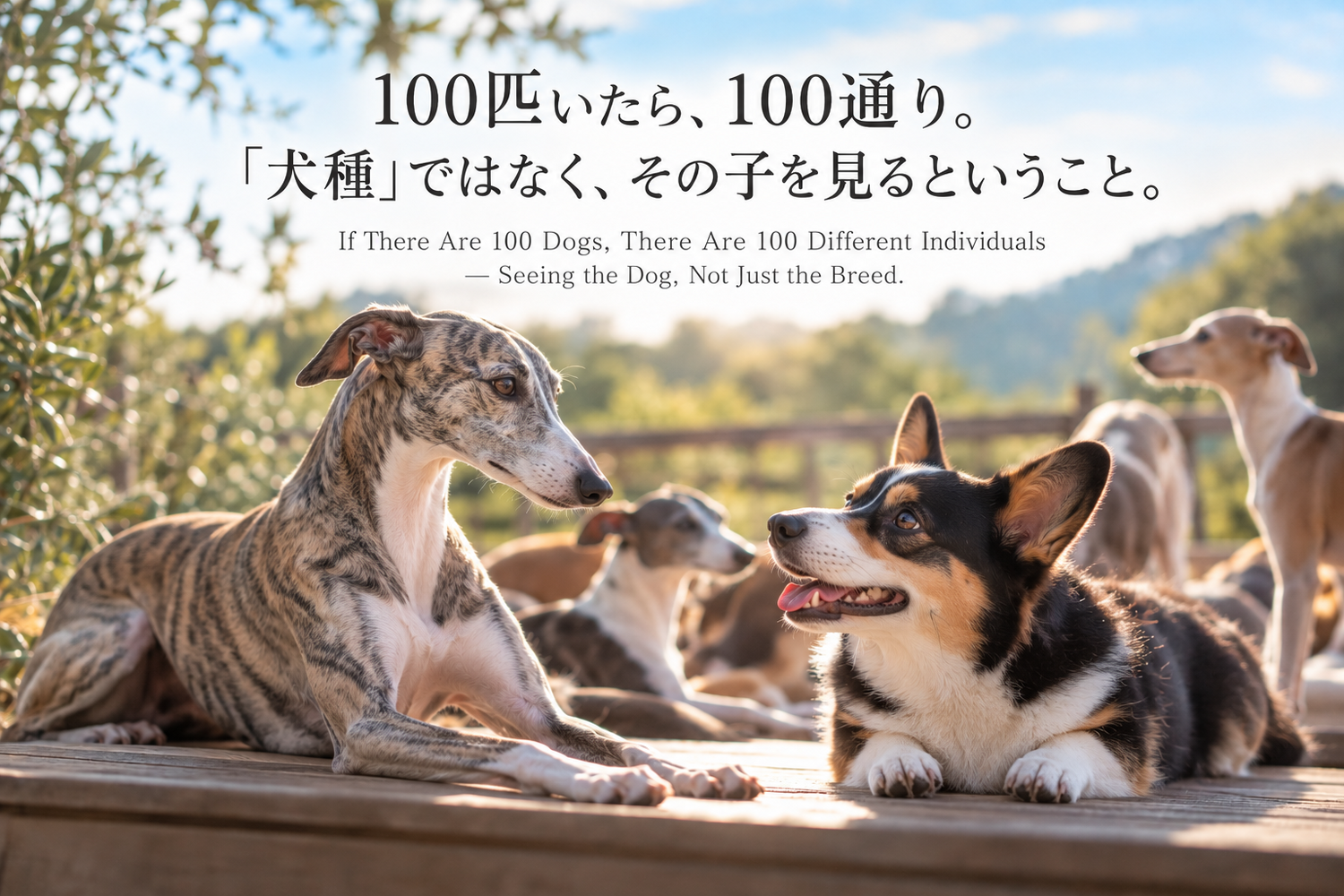
犬には、犬種ごとの特徴があります。 「イタグレはこういう性格」 「ウィペットはこういう犬」 「コーギーはこういう傾向がある」 犬種について知ることは、その犬を理解するための大切な手がかりです。 でも、たくさんの犬たちと暮らしていると、それだけでは説明できないことが本当にたくさんあります。 同じ犬種でも違う。 同じ両親から生まれた兄弟姉妹でも違う。 100匹いたら、100通り。 だから私は、「この犬種だからこうだ」と見るよりも、 「この子は、どんな子なんだろう?」 と、一頭一頭を見ることを大切にしています。 社会化は「人間にとって扱いやすい犬」を作ること? 子犬の社会化は、とても大切です。 人、犬、音、場所、物、さまざまな環境を経験しながら、これから暮らしていく世界を知っていく。 でも私は、社会化とは「何をされても平気な犬を作ること」ではないと思っています。 まして、人間にとって扱いやすい犬にすることだけが目的ではありません。 犬にもそれぞれ、 好きなもの。 苦手なもの。 怖いもの。 安心できる距離。 があります。 だから、「苦手をなくすにはどうするか」だけではなく、 「この子は何が苦手なんだろう?」 「どのくらいの距離なら安心できるんだろう?」 「どう接したら、この子は安心できるんだろう?」 そんなことを見つけていくのも、社会化や犬との暮らしの大切な部分だと思っています。 苦手なことは、全部克服しなければいけない? 特に、ある程度成長してから迎えた犬には、その子がそれまで生きてきた時間があります。 経験してきたことも違えば、経験してこなかったことも違う。 怖かった記憶が残っていることもあるでしょう。 そんな犬を迎えたとき、すべてを一から「作り直す」必要があるのかな、と私は思います。 もちろん、安全に生活するために必要なことはあります。 でも、暮らしていくうえで特に困らないことまで、無理に克服させる必要があるでしょうか。 苦手をなくすことだけではなく、 「苦手なままでも、安心して暮らせる方法を探す」 という選択肢があってもいいと思っています。 リゼの場合——苦手なら、接し方を変える うちのウィペットのリゼは、後ろから抱き上げられることがあまり好きではありません。 だったら私は、後ろから無理に抱こうとは思いません。 前から抱けばいい。 人の前をどんどん歩くより、人の後ろについて歩きたがることもあります。 それなら、それもリゼのペース。 「犬ならこうするもの」 「これくらいできなければ」 という形に、無理に当てはめる必要はないと思っています。 そんなふうに過ごしているうちに、リゼの表情は少しずつ柔らかくなってきました。 呼ぶと、尻尾をゆらゆら振ってくれるようにもなりました。 何かを無理に克服させたからではなく、 「この人は、嫌なことを無理にしない」 そう感じてもらえる時間を積み重ねてきた結果なのかもしれない、と私は感じています。 ジョイの場合——近づかないことも、ひとつの接し方 そして、コーギーのジョイ。 ジョイは、人が近づこうとすると距離を取ったり、逃げたり、吠えたりすることがあります。 そんなとき、「もっと人に慣れさせなきゃ」と追いかけて触ろうとはしません。 ジョイには、ジョイの安心できる距離があるからです。 こちらから距離を縮めるのではなく、ジョイ自身が、 「ちょっと近づいてみようかな」 と思えるのを待つ。 人から見れば、「もっと触れ合った方がいい」「逃げないように慣らした方がいい」と感じるかもしれません。 でも私は、人との距離を縮めることだけが、その犬にとっての成長ではないと思っています。 逃げるという選択肢があること。 嫌なら距離を取れること。 そして、その意思を人間側が尊重すること。 それによって初めて、「ここでは無理をしなくてもいい」と犬が感じられることもあるのではないでしょうか。 リゼとジョイでは、苦手なことも違えば、安心できる距離も違います。 だから、同じ方法を当てはめる必要もありません。 「普通はどうするか」ではなく、「この子なら、どうすれば安心できるか」。 私は、そこから考えるようにしています。 「できるようにする」だけが正解ではない 犬と暮らしていると、 もっと人に慣れさせなきゃ。 もっと犬と遊べるようにしなきゃ。 怖がらないようにしなきゃ。 どこへ行っても平気な犬にしなきゃ。 そう考えてしまうことがあります。 でも、本当にすべての犬が同じところを目指す必要があるのでしょうか。 犬が苦手な犬なら、犬がたくさん集まる場所へ無理に連れて行かなくてもいい。 知らない人に触られることが苦手なら、誰にでも触ってもらえる犬を目指さなくてもいい。 もちろん、診察や災害時など、安全や健康のために必要なことは少しずつ経験しておく必要があります。 でも、それと「何でも我慢できる犬にすること」は別の話です。 その子が生きていくために本当に必要なことと、人間が「犬ならできてほしい」と思っているだけのこと。 そこを分けて考えることも、その犬を尊重することだと思っています。 犬種を見る。でも、最後は「その子」を見る。 私は、犬種の特徴を軽視しているわけではありません。 何のために作られてきた犬なのか。 どんな行動が出やすいのか。 どんな身体的特徴を持っているのか。 犬種を知ることで理解できることは、たくさんあります。 でも、それは、 「この犬種だから、この子も絶対こう」 と決めるための知識ではありません。 犬種は、その子を理解するための手がかり。 そして答えは、目の前にいるその子の中にあります。 何が好きなのか。 何が怖いのか。 どんな距離なら安心できるのか。 どう接すると表情が柔らかくなるのか。 100匹いたら、100通り。 犬をこちらの理想に合わせることだけを考えるのではなく、私たちの側もその子を知り、その子に合わせていく。 私はこれからも、犬種という枠の向こうにいる「その子」を、一頭一頭見ていきたいと思っています。
If There Are 100 Dogs, There Are 100 Different Individuals — Seeing the Dog, Not Just the Breed Every breed has its own characteristics. We often hear statements such as: “Italian Greyhounds are like this.” “Whippets behave like that.” “Corgis tend to be this way.” Understanding breed tendencies is valuable. They can give us important clues about a dog’s behavior, needs, and background. But after living with and observing many dogs, I have learned that breed alone can never explain everything. Dogs of the same breed can be completely different. Even siblings born to the same parents can grow into very different individuals. If there are 100 dogs, there are 100 different individuals. That is why, instead of simply asking what a breed is supposed to be like, I try to ask: “Who is this particular dog?” Is Socialization About Creating a Dog Who Is Easy for Humans? Socialization during puppyhood is extremely important. Through experiences with people, dogs, sounds, places, objects, and different environments, puppies gradually learn about the world they will live in. But I do not believe socialization means creating a dog that tolerates absolutely everything. Nor do I believe its purpose is simply to make dogs easier for humans to handle. Every dog has things they enjoy, things they dislike, things they fear, and a distance at which they feel safe. So instead of only asking, “How can I make this dog overcome this?” I also think we should ask: “What makes this dog uncomfortable?” “What distance feels safe?” “How can I interact with this dog in a way that helps them feel secure?” Learning those answers is also an important part of living with dogs. Does Every Fear Need to Be Overcome? A dog who joins us later in life already has a history. They have experienced some things and may have had little or no experience with others. They may also carry memories of situations that frightened them. When we welcome such a dog, I sometimes wonder whether everything truly needs to be “rebuilt.” Of course, there are skills and experiences dogs need in order to live safely in our world. But not every discomfort needs to be eliminated simply because we would prefer it to disappear. Sometimes, instead of asking how to remove a dog’s discomfort, we can ask: “How can this dog live safely and comfortably even if this remains difficult for them?” Lize — Changing the Way We Approach the Dog My Whippet, Lize, does not particularly like being picked up from behind. So I do not insist on doing it that way. I can simply approach and pick her up from the front. She also sometimes prefers to walk behind a person rather than confidently walking ahead. That is okay. It is part of Lize’s own pace. Over time, her expression has gradually softened. When I call her, she now gently wags her tail. Perhaps this did not happen because I forced her to overcome everything she disliked. Perhaps it came, at least in part, from learning: “This person will not force me to do things that make me uncomfortable.” Joy — Sometimes Giving Space Is Also a Form of Communication Then there is my Corgi, Joy. When a person approaches, Joy may move away, run off, or bark. When that happens, I do not chase him because I think he needs to become more comfortable with people. Joy has his own comfortable distance. Instead of always closing that distance myself, I can give him the opportunity to decide: “Maybe I want to come a little closer.” From a human perspective, it may seem that he should receive more physical contact or be taught not to move away. But I do not believe that becoming physically closer to people is the only measure of a dog’s progress. Being able to move away matters. Having the choice to create distance matters. And having that choice respected by people matters too. Sometimes, that may be exactly what helps a dog learn that they are safe. Lize and Joy have different sensitivities and different boundaries. So why should the same approach be applied to both? Rather than asking, “What are dogs normally supposed to do?” I prefer to ask: “What would help this particular dog feel safe?” Being Able to Do Everything Is Not the Only Goal It is easy to think: “My dog needs to become friendlier.” “They need to play with other dogs.” “They need to stop being afraid.” “They should be comfortable everywhere.” But does every dog really need to reach the same destination? A dog who does not enjoy other dogs does not necessarily need to spend time surrounded by them. A dog who dislikes being touched by strangers does not necessarily need to become a dog that anyone can pet. Of course, experiences that are necessary for health and safety—such as veterinary care or emergency handling—still matter. But that is different from expecting a dog to tolerate everything. We can distinguish between what a dog genuinely needs for a safe life and what humans simply expect dogs to be able to do. I believe making that distinction is also part of respecting the individual dog. Understand the Breed — Then Look at the Individual Breed characteristics still matter. Understanding what a breed was developed to do, which behaviors may come naturally, and what physical characteristics it carries can teach us a great deal. But breed knowledge should help us understand an individual. It should not decide who that individual must be. Breed is a clue. The dog standing in front of us is where we find the answer. What does this dog enjoy? What frightens them? What distance feels safe? What kind of interaction helps their expression soften? If there are 100 dogs, there are 100 different individuals. Rather than always asking dogs to adapt to our ideal, sometimes we can be the ones who observe, learn, adjust, and meet them where they are. That is how I want to continue seeing every dog in my care—not only as a member of a breed, but as the individual standing in front of me.
Cuddly Animal
住所:茨城県石岡市山崎3745-6